
Pakistan is undergoing a significant shift towards urbanization, with millions of people expected to live in urban centers by 2023. This rapid urban growth means a surge in construction activities, offering a unique opportunity to embrace energy-efficient appliances and effective Energy Efficient Building Codes. The traditional approach of horizontal urbanization, spreading across vast areas of land, also raises concerns about the efficient use of resources, particularly agricultural land. By prioritizing energy efficiency, we can minimize energy consumption, reduce greenhouse gas emissions, and create a healthier living for all.
The National Energy Efficiency and Conservation Authority (NEECA) is committed to transforming the building industry by promoting energy efficiency practices. Let's explore how NEECA is leading the way in creating comfortable, cost-effective, and eco-friendly homes and why it matters for you.
NEECA's Solutions: Energy-Efficient Homes for All
NEECA recognizes the importance of energy efficiency in the building sector and has introduced a range of initiatives to promote energy-smart practices. One key initiative is the implementation of the Energy Conservation Building Codes (ECBC-2023) and its integration into the building bylaws of provincial development authorities, ensuring energy-efficient practices in new construction as well as in the old buildings through retrofitting techniques mentioned in ECBC-2023. These standards cover various aspects, including building envelopes, heating, ventilation, air conditioning (HVAC) equipment, and lighting. By adhering to these codes, we can ensure that new constructions are energy efficient from the ground up.
NEECA is also working on retrofitting existing buildings with energy-efficient technologies and the detailed design of the retrofitting techniques have been included in the Energy Conservation Building Code 2023. By adopting energy conservation practices and upgrading appliances, we can significantly reduce energy consumption in residential and commercial buildings. This is crucial as buildings currently account for a large portion of energy consumption in Pakistan.
Interventions have the potential to drive substantial energy savings
What is stopping you from adopting energy conservation and efficiency practices in your daily life? #NEECA
— NEECA (@NEECA_Pakistan) July 25, 2023
NEECA's Interventions: Driving Energy Efficiency in the Power Sector
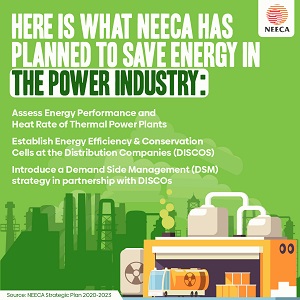
One of NEECA's flagship initiatives is establishing Energy Efficiency & Conservation Cells at all the DISCOs (Distribution Companies). These cells will focus on capacity development within power sector entities, enabling them to implement energy efficiency measures effectively. By building a knowledgeable workforce, NEECA aims to drive the widespread adoption of energy-saving practices
In addition, NEECA has successfully launched its Energy Efficiency Standard & Labeling (EES&L) program. This program promotes the use of energy-efficient appliances by implementing energy labeling schemes and setting minimum energy performance standards. By partnering with manufacturers, development partners, and government agencies, NEECA has successfully launched energy labeling schemes for Fans and is actively working on energy standards for other electrical appliances, including refrigerators, air conditioners, and electrical motors.
Benefits of Energy Efficiency in the Power Sector
Implementing energy efficiency measures in the power sector brings numerous benefits. By reducing transmission and distribution losses, optimizing power generation, and improving system performance, organizations can save costs, enhance reliability, and reduce the environmental impact. Energy efficiency also plays a crucial role in mitigating climate change and improving the country's resilience to its effects.
Moreover, energy efficiency measures contribute to reducing the overall energy import bill, improving energy security, and creating opportunities for economic growth. By saving energy, businesses and consumers can reduce their energy bills, resulting in significant cost savings that can be reinvested in other sectors of the economy.
"We can address the issues of peak loads by adopting energy-efficient technologies."


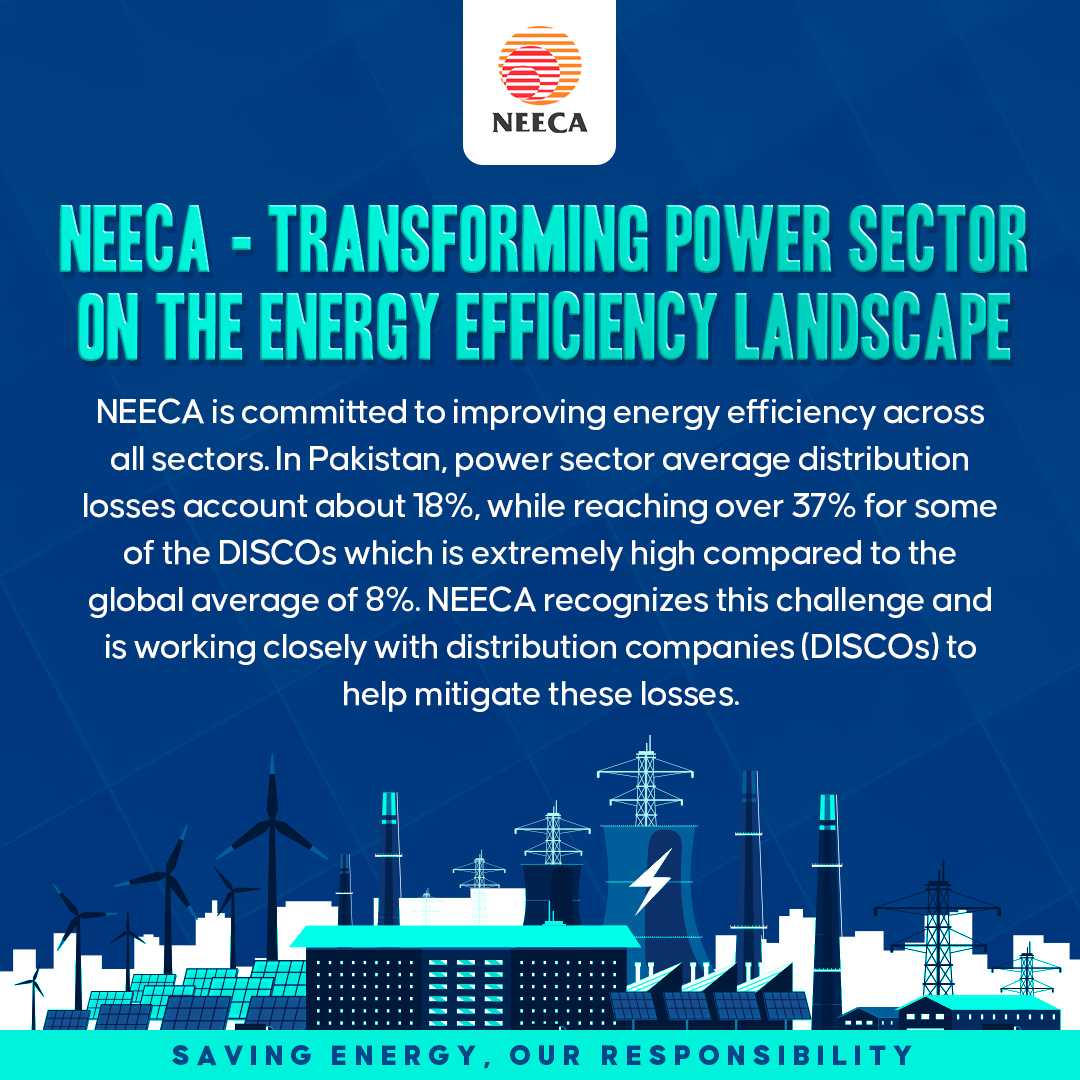
TRANSFORMING POWER SECTOR LANDSCAPE
NEECA is committed to improving energy efficiency across all sectors. In Pakistan, power sector average distribution losses account about 18%, while reaching over 37% for some of the DISCOS which is extremely high compared to the global average of 8%. NEECA recognizes this challenge and is working closely with distribution companies (DISCOS) to help mitigate these losses.
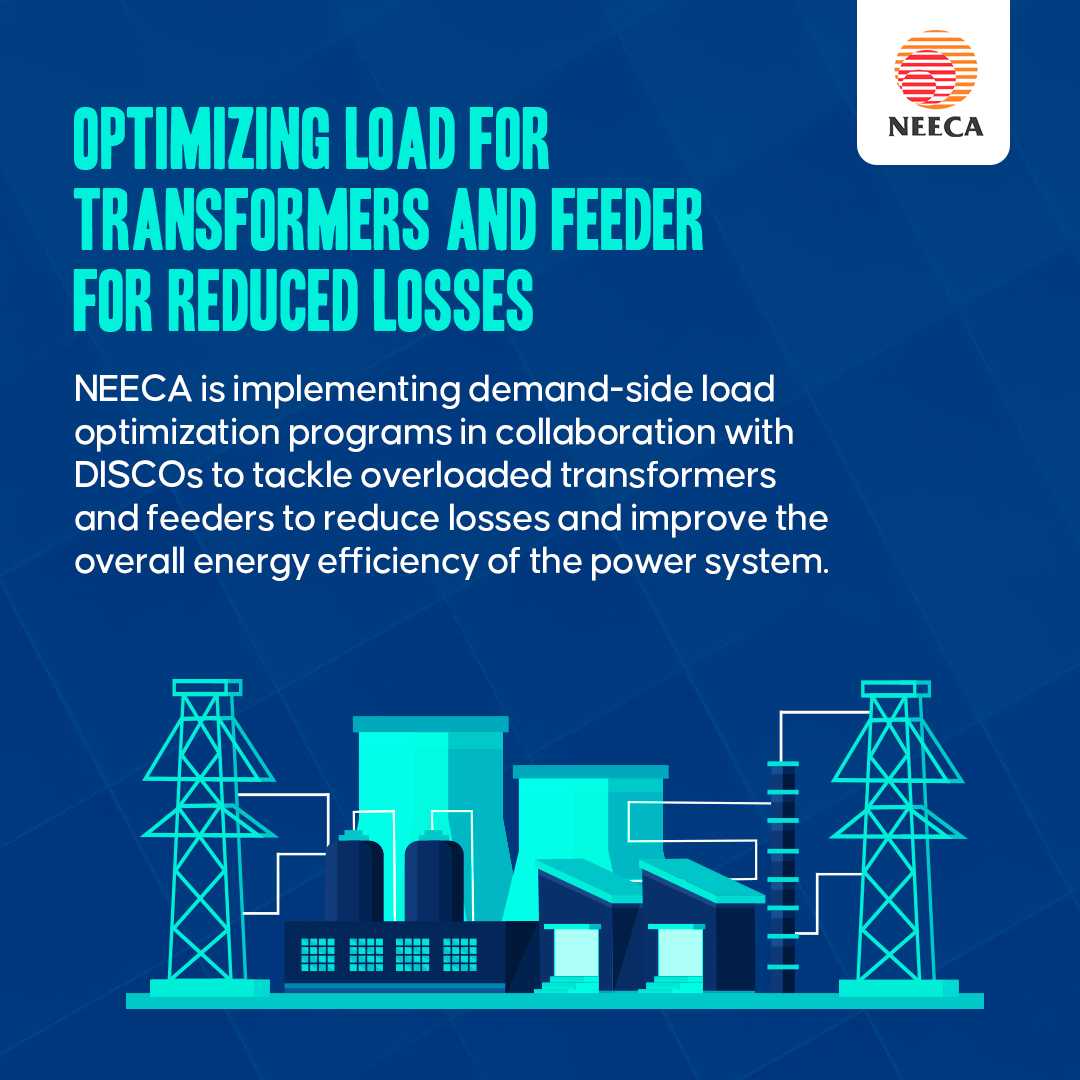
OPTIMIZING LOAD FOR TRANSFORMERS
NEECA is implementing demand-side load optimization programs in collaboration with DISCOS to tackle overloaded transformers and feeders to reduce losses and improve the overall energy efficiency of the power system.
Homes and residential areas account for half the share of electricity consumption.
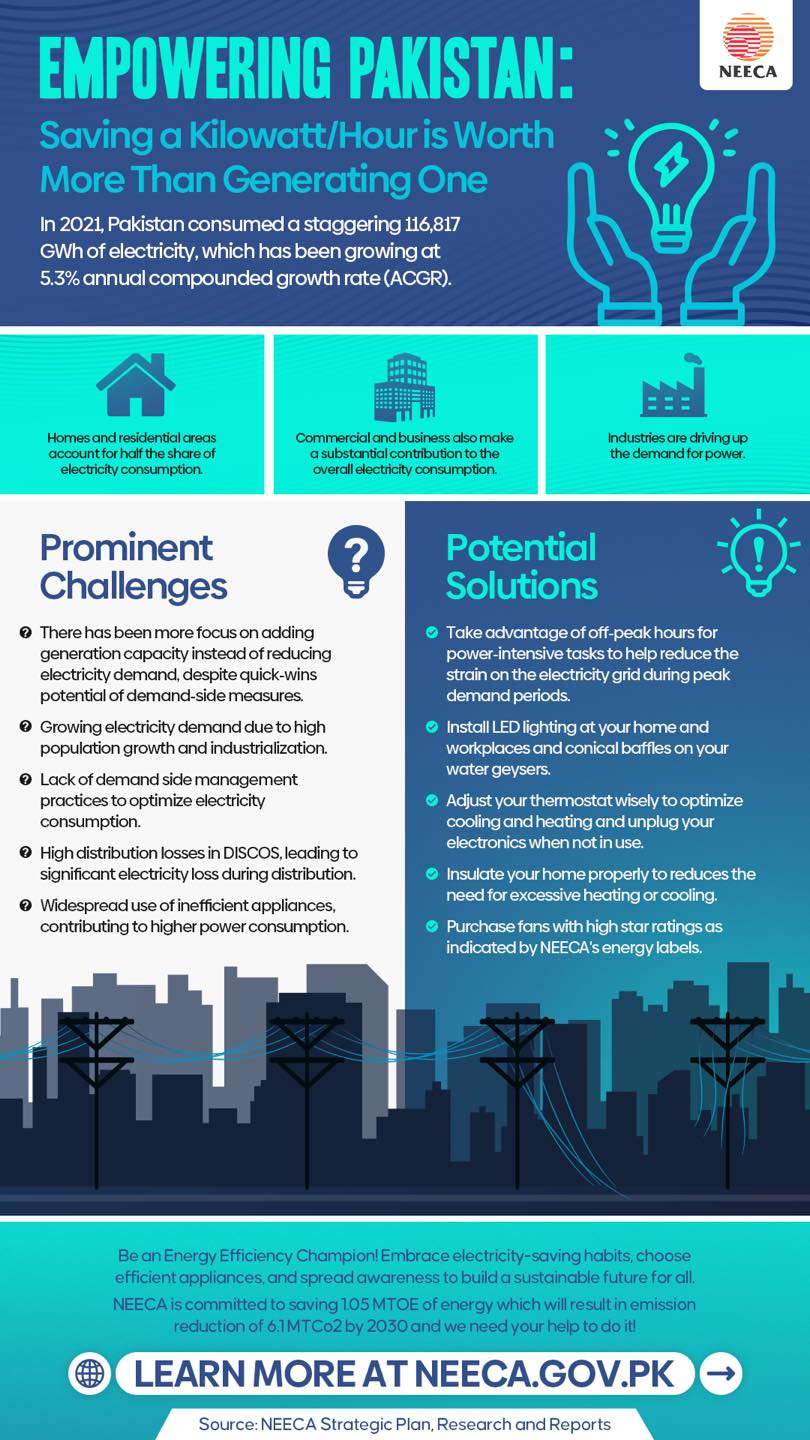
Businesses make a substantial contribution to power use.
Industries are driving up the demand for power.