
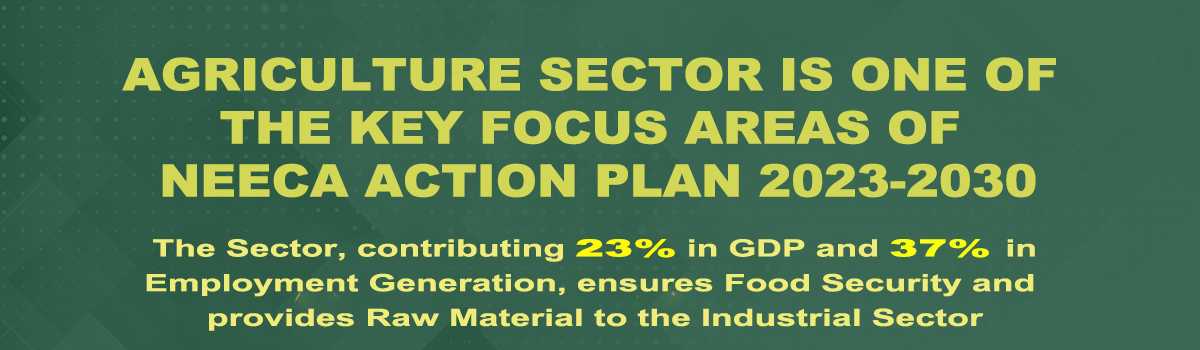
The Need for Energy Efficiency:
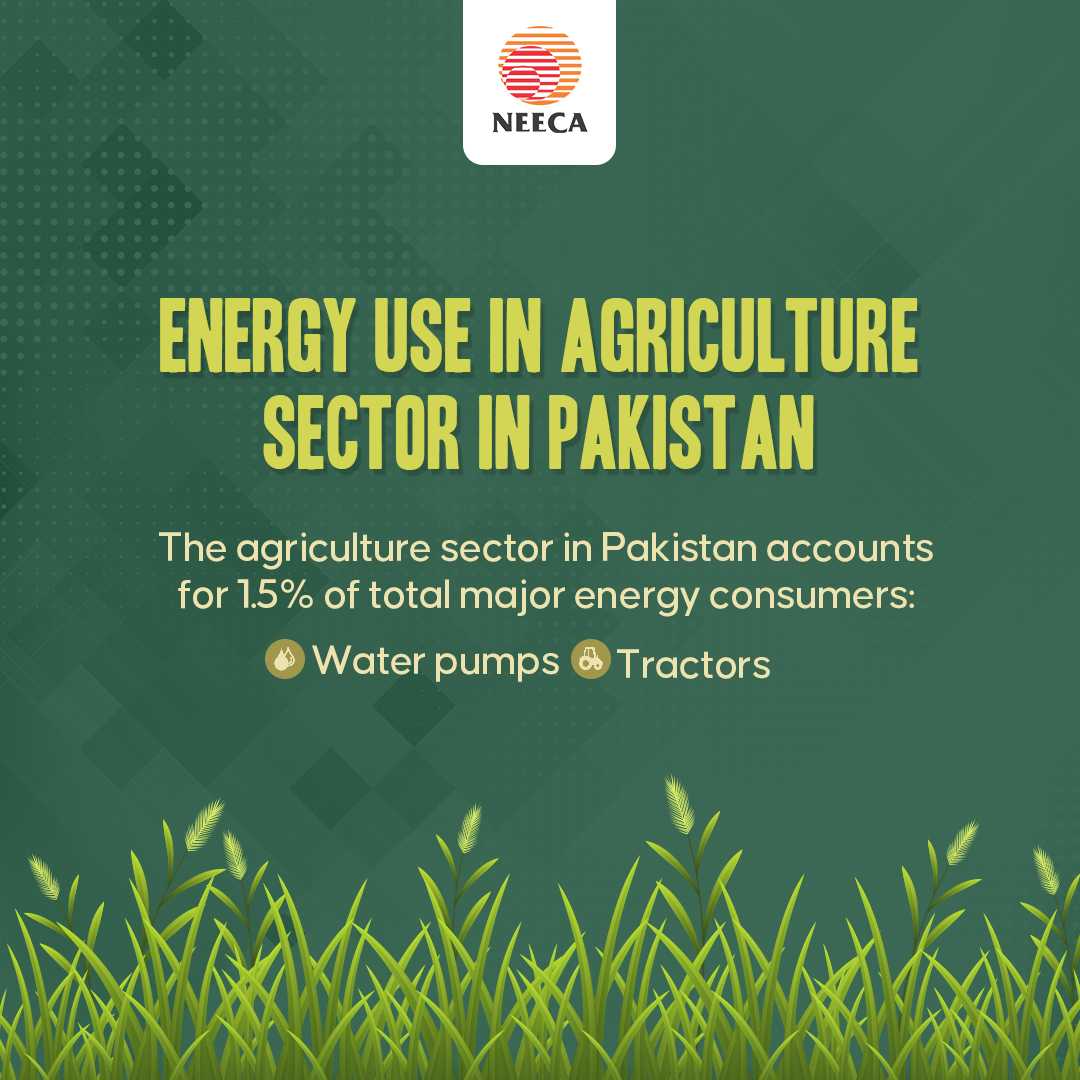
Did you know that the agriculture sector accounts for 1.5% of total final energy consumption in Pakistan? However, as mechanized practices become more prevalent, the use of commercial energy in agriculture is steadily increasing. This energy consumption is largely inefficient, particularly in processes like irrigation using diesel and electric-powered pumps.
Unlocking the Potential:
Water pumps and tractors are major energy consumers in agriculture. Over 90% of energy in agriculture comes from electricity, while 10% is from fuel, mainly High-Speed Diesel. Effective energy efficiency measures offer a promising solution for farmers. By implementing energy efficient designs for tube wells and modern and advanced technologies for farm machinery, farmers can save energy, reduce costs, increase crop yields, and enhance profitability.
Benefits for the Agriculture Community:
Energy efficiency measures can have a significant positive impact on Pakistan's agriculture community. Tractors and tube wells are essential agricultural equipment, and their energy consumption contributes to a substantial portion of input costs. By ensuring energy standards for agricultural machinery, farmers can lower production costs, increase profit margins, and enhance their overall livelihoods.
Reducing Energy and Food Production Losses:
Post-harvest losses are a significant concern for the agriculture sector, with an estimated 25% of fruits and vegetables produced each year being lost due to poor harvest conditions. These losses amount to millions of dollars in wasted resources. By incorporating energy-efficient designs in cold storage houses, farmers can reduce the cost of energy used for storage, leading to significant savings and reduced post-harvest losses.
Q&A with Khalil Raza and Muneeb Ahmed
The Role of NEECA:
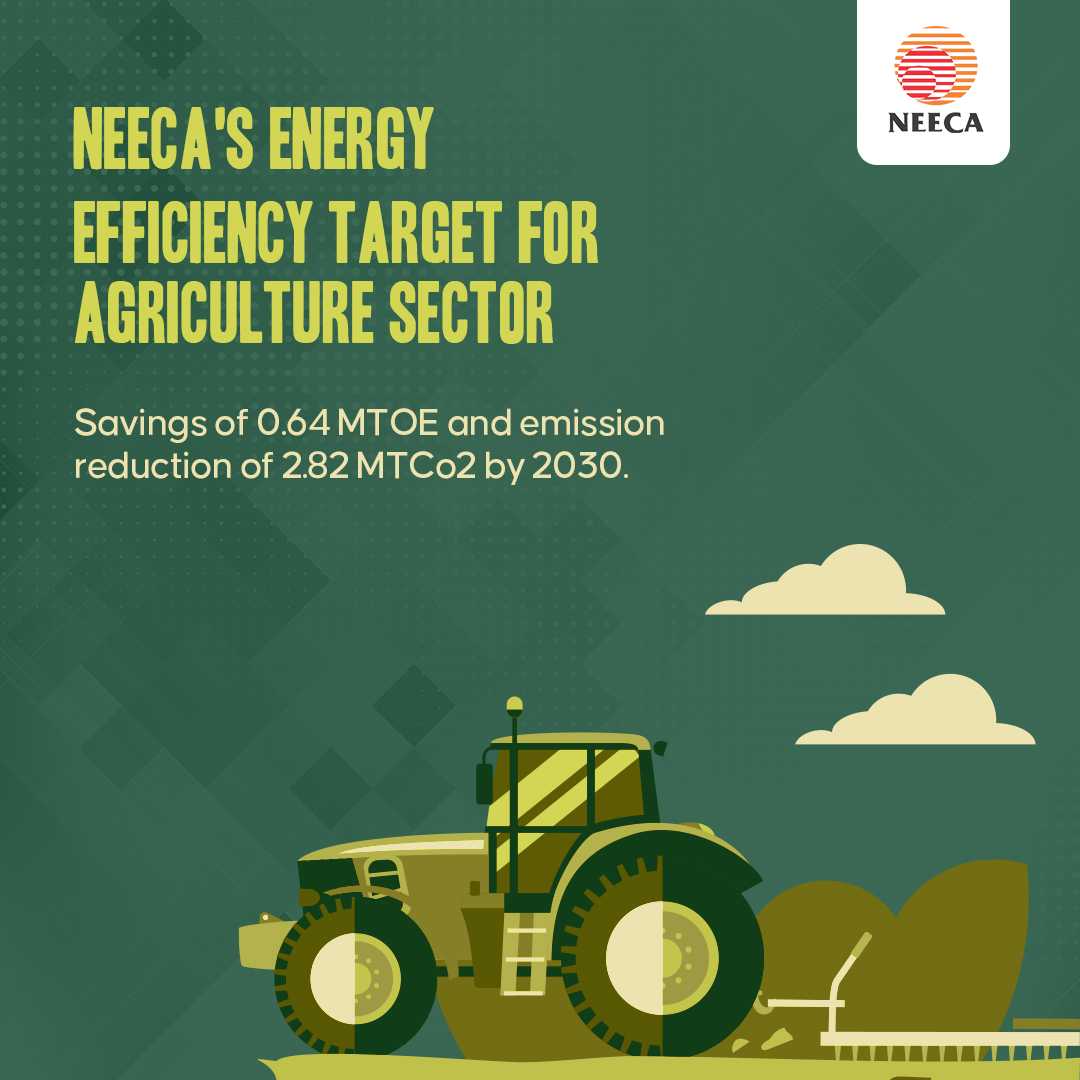
The National Energy Efficiency and Conservation Authority (NEECA) plays a crucial role in promoting energy efficiency in the agriculture sector. Through initiatives like Minimum Energy Performance Standards for electric motors and tube wells, NEECA aims to drive energy conservation and create awareness among farmers. NEECA is promoting the use of solar power for tube wells and water pumps for cost-effective and sustainable energy supply. NEECA also provides training programs and support to enhance technical knowledge and help farmers adopt energy-efficient practices.
The Way Forward - Our Role:
To ensure reliable agricultural growth, it is essential for farmers and stakeholders to prioritize energy efficiency. Regular maintenance of machinery, using electricity during off-peak hours, and adopting energy-efficient technologies are some simple yet effective steps that farmers can take. Moreover, the implementation of energy efficiency standards, solarization of water pumps, and the establishment of tune-up centers for tractors and tube wells are key milestones on the path to a more energy-smart agriculture sector.
Energy efficiency holds immense potential for transforming Pakistan's agriculture sector. By embracing energy-efficient practices, farmers can reduce costs, increase productivity, and contribute to an energy-smart future. It is time for the agriculture community to prioritize energy efficiency, leverage the support of organizations like NEECA, and work together towards a more energy smart and more prosperous agricultural landscape in Pakistan.
What is stopping you from adopting energy conservation and efficiency practices in your daily life? #NEECA
— NEECA (@NEECA_Pakistan) July 25, 2023
"The Ministry will fully support NEECA in achieving Energy Conservation targets at the National Level."
— Mr. Muhammad Abdullah Khan Sumbal


ENERGY USE IN AGRICULTURE SECTOR
The agriculture sector in Pakistan is a substantial contributor to the country's energy consumption, representing around 1.5% of the total energy consumption. This energy allocation is primarily directed towards operating water pumps and tractors, which are critical for efficient and mechanized farming. Given the importance of agriculture in Pakistan's economy, optimizing energy use in this sector is essential for both economic and environmental sustainability.
Irrigation through diesel and electric pumps is extremely inefficient in Pakistan.
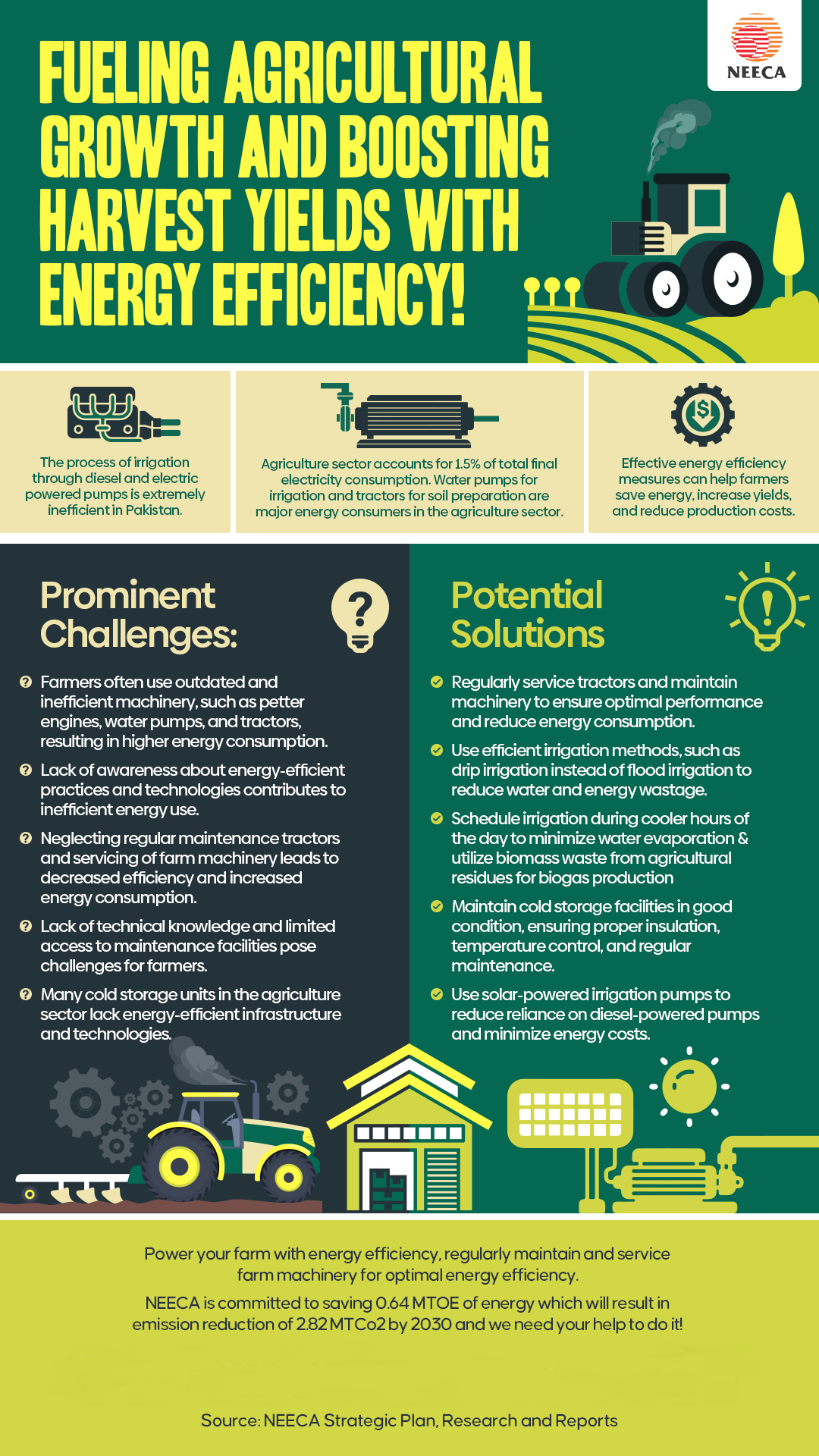
Agriculture Sector accounts for 1.5% of total consumption.
Efficiency measures help farmers save energy.